
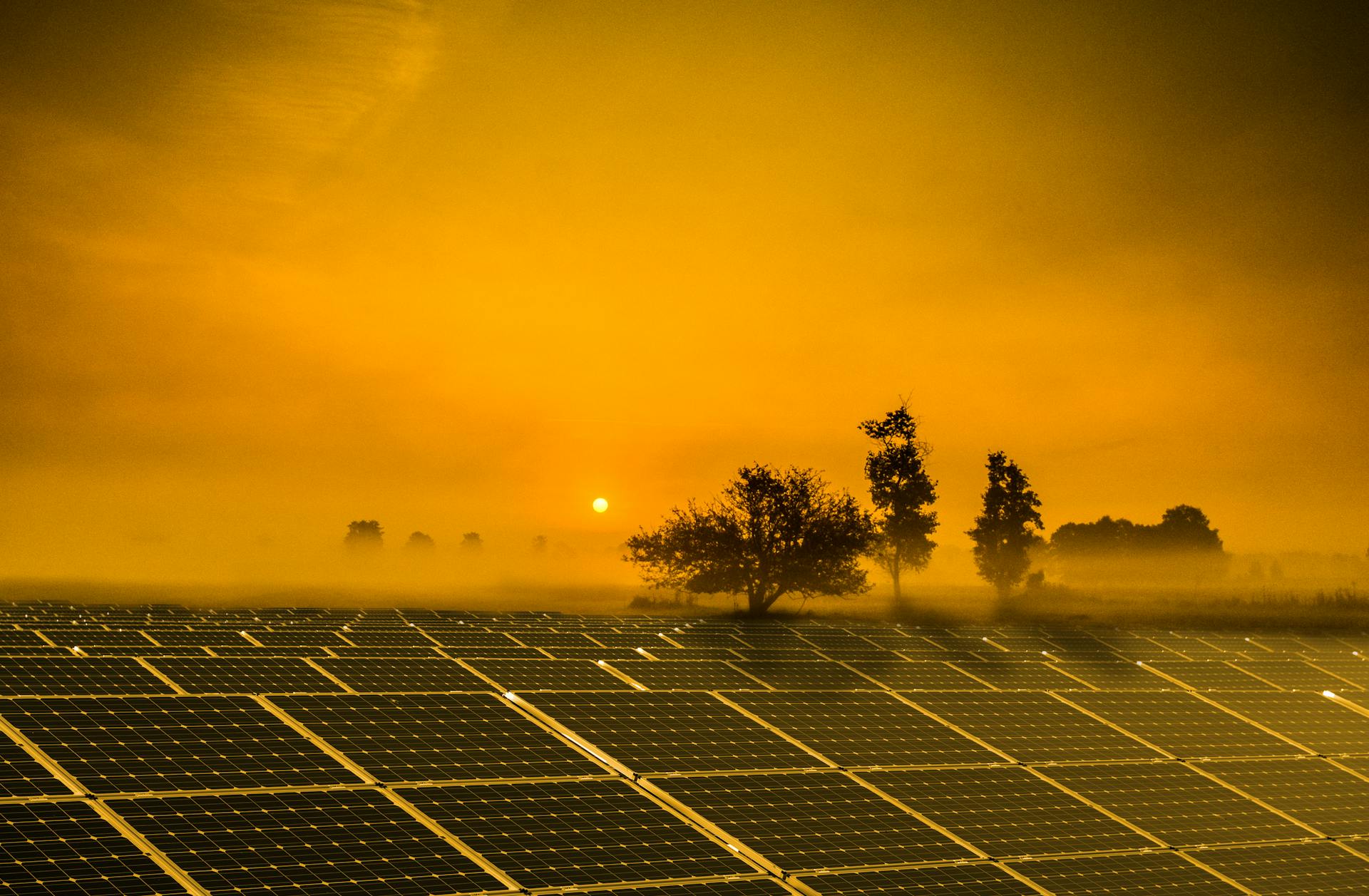
Empowering India’s Agricultural & Renewable Future.
Identifying and filling structural gaps in the evolving renewable sector to drive sustainable growth across Gujarat and Maharashtra.
Discuss a projectThree components. One integrated solar mission.
The Pradhan Mantri Kisan Urja Suraksha evam Utthaan Mahabhiyan (PM-KUSUM) scheme creates bankable solar investment pathways across three distinct components — each generating verifiable climate impact.
Grid-Connected Solar Plants
500 kW to 2 MW solar installations feeding directly into the agricultural distribution grid. Farmers earn lease income from their land while the grid gains decentralised clean generation capacity.
- 500 kW – 2 MW per installation
- Agricultural land utilisation
- Direct grid feed-in with lease income
Standalone Solar Pumps
Off-grid solar pump installations providing energy independence to farmers — eliminating diesel costs and grid dependency for agricultural water pumping up to 7.5 HP.
- Up to 7.5 HP pump capacity
- Fully off-grid operation
- Diesel cost elimination
Grid-Connected Pump Solarization
Feeder-level solarization of existing grid-connected agricultural pumps — reducing transmission losses and the overall load on the distribution network at scale.
- Existing pump solarization
- Feeder-level aggregation
- Grid burden reduction
Beyond PM-KUSUM: two further government solar initiatives.
PVTG Solar Scheme
Bringing off-grid solar energy to un-electrified households of Particularly Vulnerable Tribal Groups (PVTGs). These installations address energy poverty in the most remote communities — creating measurable social and emissions impact that underpins robust carbon project development and meaningful ESG reporting.
Residential Rooftop Solar at Scale
India’s residential rooftop solar scheme targeting the offset of 720 million tonnes of CO₂ through distributed generation at household level. The scheme creates large pools of verified emissions reductions that can be structured into internationally recognised carbon credit projects under VCS and Gold Standard frameworks.
Decentralised solar becomes a globally recognised carbon mitigation asset.
Each PM-KUSUM component generates verifiable emissions reductions against fossil-fuel baselines. The Earthist structures these reductions into project-level carbon credit pathways — connecting government solar schemes to international voluntary carbon markets, ESG reporting frameworks, and institutional investors seeking credible, measurable climate exposure in India.